Truth in Politics 2 IEC Issues Corrective Statement on Washington County Settlement By: Truth in Politics 2 Independent Expenditure Committee
Published by Conduit News
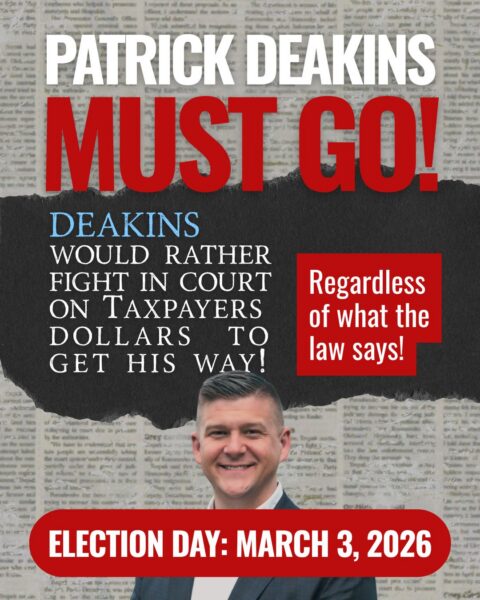
In recent campaign advertisements, Truth in Politics 2 IEC (“TIP2”) stated that Washington County Judge Patrick Deakins “gave $500,000 of taxpayer money to his former employer.”
On February 18, 2026—one day after early voting opened for the March 3, 2026, Washington County election—RMP LLP sent TIP2 a five-page cease and desist letter demanding that we retract our reporting, remove all advertisements and articles, and publish a scripted apology drafted by RMP’s own attorneys. The deadline: five business days—conveniently timed to expire just before Election Day.
We declined.
At the same time, we want to be precise in making clear that the $500,000 settlement was paid by Washington County taxpayer dollars to EagleCrest Recovery, LLC—the client of RMP LLP, the law firm that previously employed Deakins through its subsidiary, Peritum, LLC. That tax money was not paid directly to RMP LLP. RMP served as EagleCrest’s legal counsel in the federal lawsuit against Washington County and billed EagleCrest on an hourly basis for its legal services in the case. We find no fault in RMP LLP for competently representing its clients. Lawyers represent clients; that is what they do.
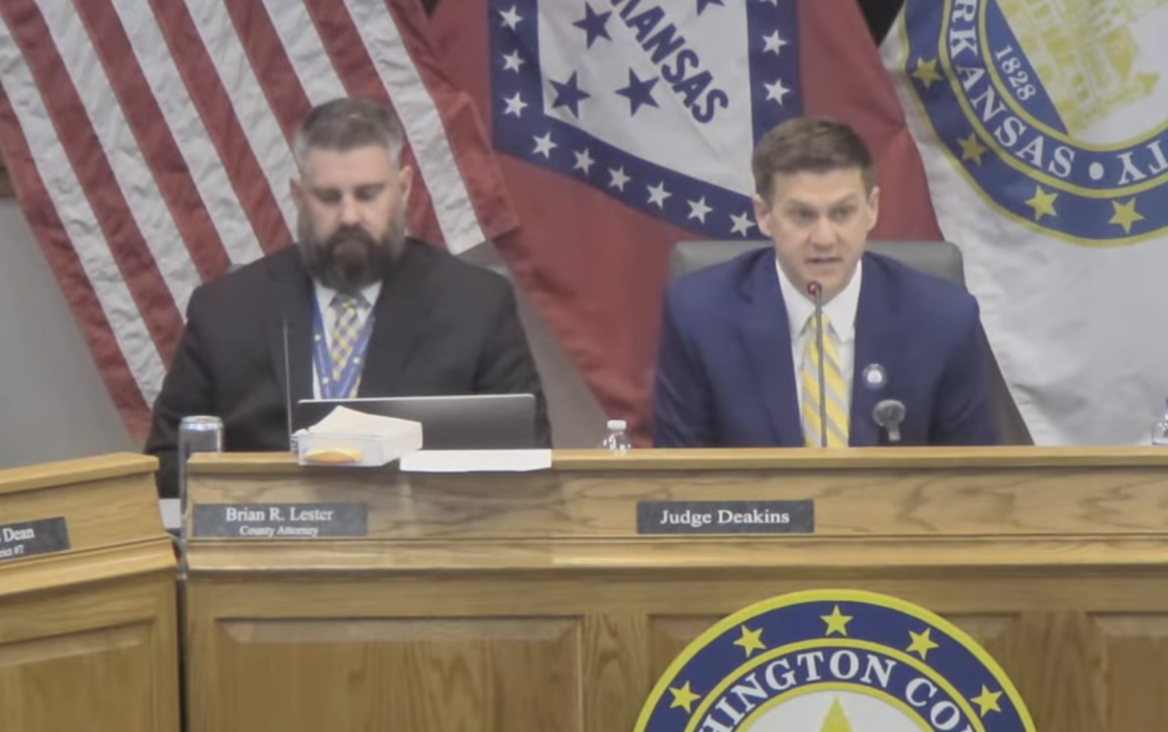
We do, however, find significant fault in the conduct of County Judge Patrick Deakins and County Attorney Brian Lester, who failed to mount any legitimate defense of Washington County taxpayers’ interests—and whose actions resulted in $500,000 of public money being paid to settle a case that was never adversarially litigated.
The public record speaks for itself, and we again present the facts for the public to draw its own conclusions as to whether Patrick Deakins has the right judgment to lead Washington County.
THE FACTS
1. Patrick Deakins’ Former Employment with RMP/Peritum. Before becoming Washington County Judge on January 2, 2023, Patrick Deakins served as CEO of Peritum LLC, an accounting entity owned by and operating within RMP LLP, one of the largest law firms in Northwest Arkansas.
2. RMP Filed Suit Against the County. On December 6, 2024, RMP LLP filed a federal civil rights lawsuit against Washington County, the Quorum Court, and Patrick Deakins in his official capacity as County Judge. The lawsuit, brought on behalf of EagleCrest Recovery, LLC and Conway Lakeside, LLC, alleged that Washington County violated the Fair Housing Act and the Americans with Disabilities Act by denying a conditional use permit for a residential recovery facility.
The complaint was signed by RMP attorneys Timothy Hutchinson, Larry McCredy, and Seth Haines.
3. The Agreed Injunction. Twelve days after filing the complaint—on December 18, 2024—the court entered a preliminary injunction enjoining enforcement of the county’s conditional use permit ordinance. The injunction was described in the docket as an “unopposed motion.” The county did not oppose it. Washington County’s own legal representative consented to an injunction against his own client.
4. The County Attorney Bent the Knee to RMP. What happened next is documented in the official transcript of the February 27, 2025, Case Management Hearing before the Honorable Timothy L. Brooks, United States District Judge.
Washington County’s attorney, Brian Lester, was asked about the County’s position in the case. His response, on the record: “I can certainly speak on behalf of the County why the County feels like it violated federal law, if the Court is interested.”—Brian Lester, County Attorney, Transcript p. 26
Read that again.
The attorney hired to defend the County told the federal court that his own client violated federal law—before the case had been tried, before evidence had been developed through adversarial process, and before any court had so ruled.
The attorney for the citizens who sought to intervene—Steven Zega, representing neighbors Charles and Mary McKinney—described the situation this way:
The County is not going to protect my clients’ interest, has never been interested in protecting my clients’ interest… Mr. Lester, before the Court said, ‘I want to hear from somebody else,’ said, ‘Oh, yeah. The County violated federal law. I can tell you the ways in which we violated federal law.’ They’re not going to defend this ordinance. It’s just that simple.—Steven Zega, Counsel for Intervenors, Transcript p. 32
5. The Federal Court’s “Collusion” Concerns. Judge Brooks—a federal judge appointed to the bench, with no stake in Washington County politics—was troubled enough by what he was witnessing to say this from the bench:
It is a fair point that the Court and the public benefit from the issues being developed through an adversarial process. And here it does seem that the plaintiffs and the defendants are aligned in such a way that—if we don’t let the intervenors intervene, how does the Court—and not just the Court, but the public- benefit from the Court’s ruling? In other words, why wouldn’t the Court’s conclusions potentially be viewed just as collusively endorsing what the parties had agreed on?—Hon. Timothy L. Brooks, U.S. District Judge, Transcript pp. 32-33
“Collusively.” That is the word a sitting federal judge used to describe how this case might appear to the public. Unfortunately, on November 3, 2025, Judge Brooks denied the motion to intervene on procedural grounds.
The denial of the motion to intervene meant that the County had never been adversarially defended, and now it never would be.
6. The $500,000 Settlement. In December 2025, the Washington County Quorum Court voted to approve a $500,000 settlement to EagleCrest Recovery—the client of RMP LLP, the firm where Patrick Deakins was employed before becoming County Judge.
Judge Deakins did not merely allow this to happen. He advocated for it. He publicly urged the Quorum Court to settle, suggesting that continued resistance was futile. The settlement paid $500,000 of taxpayer money to resolve a case that:
- Was never adversarially defended by the County’s own attorney
- Featured a county attorney who told the federal court his client violated federal law
- Prompted a federal judge to express concern about collusion
- Denied citizens the right to intervene and mount the defense, the County would not
When Patrick Deakins took the oath of office on January 2, 2023, he assumed a fiduciary duty to the people of Washington County. That duty includes, at a minimum, ensuring that the county’s legal interests are defended by competent counsel—and that the public’s money is spent through processes that are transparent, adversarial, and free from even the appearance of impropriety.
On every count, we believe Deakins failed.
Patrick Deakins knew that his former employer—the firm where he had served as CEO of its accounting subsidiary—had filed a federal civil rights lawsuit against the county he leads. He was named as a defendant in his official capacity. His former colleagues signed every pleading on the other side. A county judge with sound judgment—indeed, any public official with a passing familiarity with the concept of a conflict of interest—should have taken appropriate steps to avoid even the appearance of impropriety. For instance:
1. Publicly disclose the conflict. Deakins should have immediately and publicly disclosed his prior employment relationship with RMP to the Quorum Court, to county staff, and to the public. The voters paying the bills had a right to know that the firm suing their county was the same firm that previously employed their county judge.
2. Recuse from involvement. Deakins should have removed himself from all decision-making related to the EagleCrest litigation—including settlement discussions, strategy conversations, and public advocacy. He did the opposite: he publicly urged the Quorum Court to settle.
3. Ensure independent legal counsel. Deakins should have insisted that Washington County retain outside counsel—a lawyer with no reason to do anything other than zealously defend the County’s interests. Instead, the County was represented by Brian Lester, who told the federal court that his own client violated federal law.
Patrick Deakins did none of these things. Not one. The result of this failure of judgment is now a matter of public record:
- The County’s own attorney agreed with the opposing party that the County was guilty—before the case was tried
- A federal judge used the word “collusively” to describe how the proceedings might appear to the public
- Citizens who tried to intervene were shut out
- $500,000 of taxpayer money was paid to the clients of the County Judge’s former employer
- And when citizens and journalists reported these facts, the County Judge’s former employer threatened to sue them into silence
The appearance of impropriety here is not subtle.
The Question for March 3
Voters are not asked to render a legal verdict. They are asked to exercise judgment about who should exercise judgment on their behalf. The question is simple:
Does a county judge who permits his former employer to sue his county—who permits the county’s own lawyer to concede the case—who advocates for a half-million-dollar settlement to his former employer’s clients—who does all of this without recusing himself, without retaining independent counsel, and without supporting citizen intervention—does that person have the judgment to lead Washington County?
That is not a question for a courtroom. It is a question for a ballot box. And it is a question that no cease and desist letter—however long, however threatening, however many business days it gives you to comply—can prevent the voters from answering.
Anti-SLAPP Protections
Arkansas enacted the Citizen Participation in Government Act (Ark. Code Ann. § 16-63-501 et seq.) specifically to protect citizens and journalists from lawsuits designed to suppress speech on matters of public concern. The statute immunizes speech on issues of public interest from civil liability; requires plaintiffs to certify under oath that their claim is not a SLAPP suit; stays all discovery upon a motion to dismiss; mandates a hearing within 30 days; and authorizes sanctions, attorney fees, and compensatory damages against anyone who files a SLAPP suit to suppress protected speech.
The expenditure of $500,000 in public funds, the conduct of a sitting county judge seeking reelection, and the performance of the county attorney charged with defending taxpayers are, by any measure, matters of public concern. That is why the First Amendment exists. That is why anti-SLAPP statutes exist. And that is why we are publishing this article instead of the scripted apology sent to us by Deakins’ former boss.
Truth in Politics 2 is a registered independent expenditure committee under Arkansas law. This statement was reviewed by legal counsel. All facts contained herein are drawn from publicly available court filings, official hearing transcripts, public meeting records, published news reports, and other documents in the public record. Citations to source documents are provided throughout.
For inquiries, contact Brenda Vassaur Taylor at info@conduitnews.com