Let’s begin with a story about a man named J. William Fulbright.
In the early 1940s, Governor Homer Adkins had a problem. The publisher of a newspaper that had opposed him politically was a woman named Roberta Fulbright. Her son, J. William Fulbright, was the president of the University of Arkansas. Governor Adkins resolved his problem the way governors in Arkansas had always resolved such problems: he engineered the resignation of board members, packed the University’s Board of Trustees with loyalists, and had J. William Fulbright fired.
It worked perfectly.
And that is precisely why the people of Arkansas, in 1942, voted to make sure it could never happen again.
They called it Amendment 33 to permanently change the Arkansas Constitution. And they wrote it in language that was, by design, unambiguous: the boards governing the University of Arkansas, the state hospitals, and the state penal and correctional institutions would have independent constitutional authority over their institutions. Their powers could not be “transferred” to any other entity—not to another board, not to an administrative agency, and not to a governor. Board members could only be removed for cause, by a majority of the board itself. The amendment fixed the number of members on each board precisely to prevent the maneuver that had just been used against Fulbright.
The framers of Amendment 33 understood something that sounds obvious once stated: independence without structural protection is not independence. It is a polite suggestion that the powerful are free to ignore.
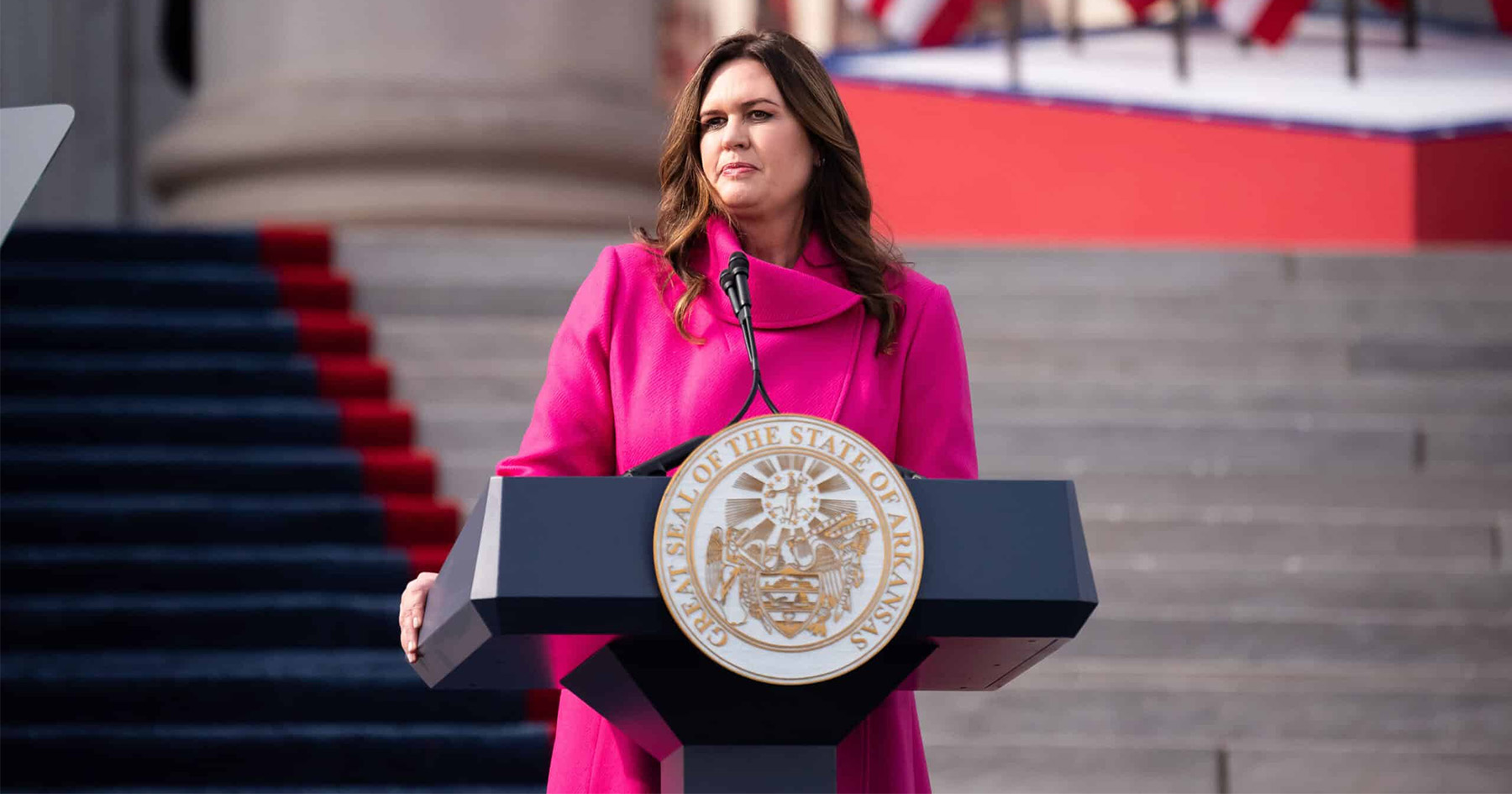
Eighty-two years later, Governor Sarah Sanders ignored it.
The Laws That Changed Everything
Acts 185 and 659 of 2023 were marketed as part of a “Safer, Stronger Arkansas” legislative package. In practical effect, they did one thing: they transferred control of the Department of Corrections from the constitutionally established Board to the Governor’s office. Under Act 185, the Secretary of Corrections—formerly accountable to the Board—would serve “at the pleasure of the Governor.” Under Act 659, the Division Directors within the Department would serve at the pleasure of the Secretary, not the Board.
The Board would retain nominal existence. It would simply no longer control anything.
Dr. William “Dubs” Byers—a Board member since 2015, a pastor, a lifelong Arkansan with 39 years in the Arkansas corrections school system, and a self-described conservative who had supported and donated to Governor Sanders’s campaign—testified before the Senate Judiciary Committee against the legislation. “Either the Secretary of Corrections should serve at the pleasure of the Board,” he said, “or the Directors should serve at the pleasure of the Board. Otherwise, I am concerned that the ordinary citizens of Arkansas lose much of their influence in the correctional system in our State.”
His testimony was ignored. The laws passed.
A Man Died
No one disputes that Arkansas has a serious prison overcrowding problem. The state imprisons roughly 596 residents per 100,000 population—the third-highest incarceration rate in the United States, behind only Mississippi and Louisiana. In the fall of 2023, its prisons held 16,288 inmates against a capacity of 15,022, with another 2,000 backed up in county jails. Forty percent of corrections officer positions—906 of 2,265—were unfilled.
Into this situation, Governor Sanders installed Joe Profiri as Secretary of Corrections. Profiri came from Arizona, where his previous employer had been found by a federal judge to provide medical care “plainly grossly inadequate,” and where defective cell-door locks linked to inmate deaths had gone unrepaired. He came to Arkansas at $210,000—$40,000 more than his predecessor.
Profiri moved quickly. Without Board review, he transferred inmates into overcrowded, understaffed facilities. When his subordinates presented the Board—minutes before a November 2023 meeting, having skipped the meeting himself—with a one-page memo requesting 622 new beds across six facilities, the Board saw the staffing numbers: Tucker Unit at 60.4% vacancy. McPherson Unit, the only women’s facility, at 57.1% vacancy. Ouachita River Unit at 51.6% vacancy. The Board approved 130 beds at the two facilities with manageable vacancy rates. It deferred the rest pending safety data.
Governor Sanders called this “bureaucratic red tape.” Attorney General Tim Griffin called the Board a failure and said its oversight was “a clarion call for constitutional and statutory reform.”
Board Chairman Benny Magness—the longest-serving corrections board chairman in American history, appointed by both Republican and Democratic governors—replied simply: “The ‘red tape’ that you reference is the Arkansas Constitution.”
He was right. But being right, as this story demonstrates, is not sufficient protection against a sufficiently determined executive.
On the night of December 13, 2023, the Governor directed Profiri to ignore the Board’s directive and proceed with the inmate transfers. That night at Ouachita River Unit—already overcrowded, already running at over 50% officer vacancy—three officers were doing the work of five. Department policy requires visual checks every thirty minutes. An inmate named Anthony Mosley went unobserved for ninety minutes. He was found hanging from a bedsheet in his cell.
The Board suspended Profiri the same day. It voted to file a constitutional lawsuit to protect its Amendment 33 authority. It fired Profiri on January 10, 2024.
Hours later, Governor Sanders hired him as a Senior Advisor in the Governor’s office at $189,210 a year.
The prisons were too understaffed to keep people alive. The Board tried to stop a plan it believed would get someone killed. Someone was killed. The Board fired the person responsible. The Governor promoted him.
The Board’s Hiring of Special Counsel
When the Board sought counsel to challenge Acts 185 and 659, it confronted a structural problem the administration may not have expected to become public: its assigned lawyer—the lawyer the State of Arkansas provides to represent constitutional boards—is the Attorney General. But Attorney General Tim Griffin had just publicly called the Board a failure and demanded legislative reform to override its constitutional authority. He was simultaneously representing the Board in active federal civil-rights litigation brought by prisoners against the very prison system the Board was trying to protect.
Client. Critic. And defense counsel for the Governor who the Board was about to sue. All at once.
Arkansas Code Annotated section 25-16-711 addresses precisely this scenario. It authorizes a constitutional officer to employ special counsel at state expense when a conflict with the Attorney General exists. The Board voted to do so in a duly noticed public meeting.
The Attorney General responded by suing the Board—not for any conduct related to prison conditions, but for allegedly discussing the hiring of special counsel in executive session. Pulaski County Circuit Judge Timothy Fox dismissed the lawsuit. In doing so, he observed that “the Attorney General has sued his own clients, in violation of his duties and responsibilities legislatively mandated to him,” and was “apparently attempting to deliberately deprive his state clients of any legal representation of any nature or kind.”
The Attorney General—the chief law enforcement officer of the State of Arkansas—was found by a sitting judge to have deliberately tried to strip his own clients of the right to legal representation. The organized bar of Arkansas has said nothing about this. Not one word.
How You Win Without Winning
The constitutional case proceeded. On November 3, 2025, Circuit Judge Patricia James held that Acts 185 and 659 “transfer powers vested in the Board in contravention of the plain text of Amendment 33 of the Arkansas Constitution,” and that they are “ultra vires, unconstitutional, and void.” She issued a permanent injunction. The Arkansas Supreme Court declined to stay it.
Governor Sanders appealed. But she did not rely on winning the appeal. She relied on something more reliable than legal arguments: the calendar.
By early 2026, three Board seats had turned over—some through natural expirations of the term, and one seat that was unusually vacated. The Governor filled them with her former Deputy Chief of Staff, a political consultant from her campaign, and two others with similarly close ties to the administration. On January 23, 2026, the newly constituted four-to-three majority voted to fire the Board’s outside counsel and rescind the authorized fee payment of $307,193.55—for two years of litigation that had just produced a constitutional victory.
On March 30, 2026, the Governor and the new Board filed a joint settlement agreement with the Arkansas Supreme Court. It declared the Board’s retention of outside counsel “unlawful.” It declared that counsel is owed nothing. It purported to release “any and all claims for costs and attorney’s fees.” And it asked the Court to vacate Judge James’s ruling and dismiss the case with prejudice.
The Governor did not win the appeal. She replaced the appellees.
Unfortunately for the Governor, the doctrine against vacating fully litigated merits rulings by settlement is well established in federal law and sound as a matter of common sense. Several cases hold that mootness by reason of settlement does not justify vacatur because the settling party has voluntarily forfeited his legal remedy by the ordinary processes of appeal. The equitable remedy of vacatur is not available to a party that manufactures the mootness by exercising the very appointment power that Amendment 33 was designed to check.
But beyond the procedural doctrine is the public-interest question. Amendment 33 means something, or it means nothing. It protects certain institutions from political interference by the executive, or it does not. It cannot mean something only when the executive lacks the patience to wait for board seats to turn over. If the constitutional question presented by this case—whether Acts 185 and 659 violated Amendment 33—is permitted to evade review through the mechanism of a board-packing-enabled collusive settlement, the answer to that question is effectively supplied by the very conduct the question was designed to prohibit. The Governor wins not because the law is on her side, but because she replaced the party who proved it wasn’t.
The Supreme Court has the authority and the institutional obligation to say “no” to this.
This Is Not Hypothetical
The University of Arkansas Board of Trustees—also an Amendment 33 institution—offers a parallel the administration would prefer you not connect. In January 2026, the University withdrew a signed offer to Emily Suski to serve as Dean of the School of Law, eight days after contract execution, following public criticism from the Senate President Pro Tempore and a statement from the Attorney General’s office expressing “dismay” at the selection. One hundred and fifty law professors from across the country condemned it as a violation of academic freedom. Law students walked out of classes. And yet the Attorney General’s office said it “applauds the decision.”
Two Amendment 33 institutions. Two constitutionally independent governance decisions. Two reversals engineered through executive and legislative pressure. The voters who adopted Amendment 33 in 1942 described this pattern exactly—because they had just watched it destroy a university presidency. They thought they had fixed it.
The Chill You Should Feel
The outside counsel who represented the Board—who was authorized by statute, whose retention was upheld by multiple courts, who prevailed on the merits after two years of contentious litigation, and who withstood multiple attempts to have him disqualified and personally sanctioned under the illegal-exaction statute—has not been paid. The settlement agreement calls his services “unlawful.” It purports to extinguish his fee claims. He was not a party to the agreement. He was not consulted. He was not told it was being negotiated.
He has now filed a motion to intervene in the Supreme Court proceeding, asserting that his legal rights—contract rights, statutory rights under section 25-16-711, due process rights—cannot be extinguished by an agreement to which he was not a party, and which was executed without his knowledge or consent.
He is correct. But consider the broader implication regardless of how that motion is resolved.
The message the settlement sends to the next lawyer is this: if you represent a constitutional board against a governor, win on the merits, and the governor reconstitutes the board through the appointment power, the new board will declare your retention unlawful and call your services illegal. It will do so in a settlement agreement that your former clients negotiated with your adversary, without telling you. And the only court ruling that validated what you did—the ruling that is also the legal foundation of your right to be compensated—will be vacated on the basis of that settlement.
Two years of work. A constitutional victory. A termination letter. A settlement you never signed declaring your services illegal.
If this is the rule, lawyers will not take these cases. Constitutionally independent boards will have no practical ability to retain counsel against an executive branch that is patient enough, strategic enough, and possessed of sufficient appointment authority to outlast the litigation. The independence that Amendment 33 guarantees will be unenforceable—not because no court will vindicate it, but because no lawyer will take the financial risk of vindicating it.
The Real Clarion Call
Benny Magness, quoting James Madison’s Federalist No. 51, told the Governor: “The accumulation of all powers legislative, executive and judiciary in the same hands may justly be pronounced the very definition of tyranny.” He wrote that sentence in November 2023. He has since been replaced on the Board he chaired, by members appointed by the Governor whose conduct he was describing.
Madison wrote it in 1788. He was describing something that had not happened yet in America. He was warning that constitutional structures must be built to resist the ambition of those who would consolidate power, because ambition does not announce itself as tyranny. It announces itself as public safety. As efficiency. As cutting through bureaucratic red tape.
Amendment 33 was built to resist exactly that announcement. The question before the Arkansas Supreme Court is whether it still does.