Lawmakers are back to trim income-tax rates again—but calling it “returning $1.5 billion to taxpayers” is not the same thing as cutting taxes, and taxpayers deserve straight answers.
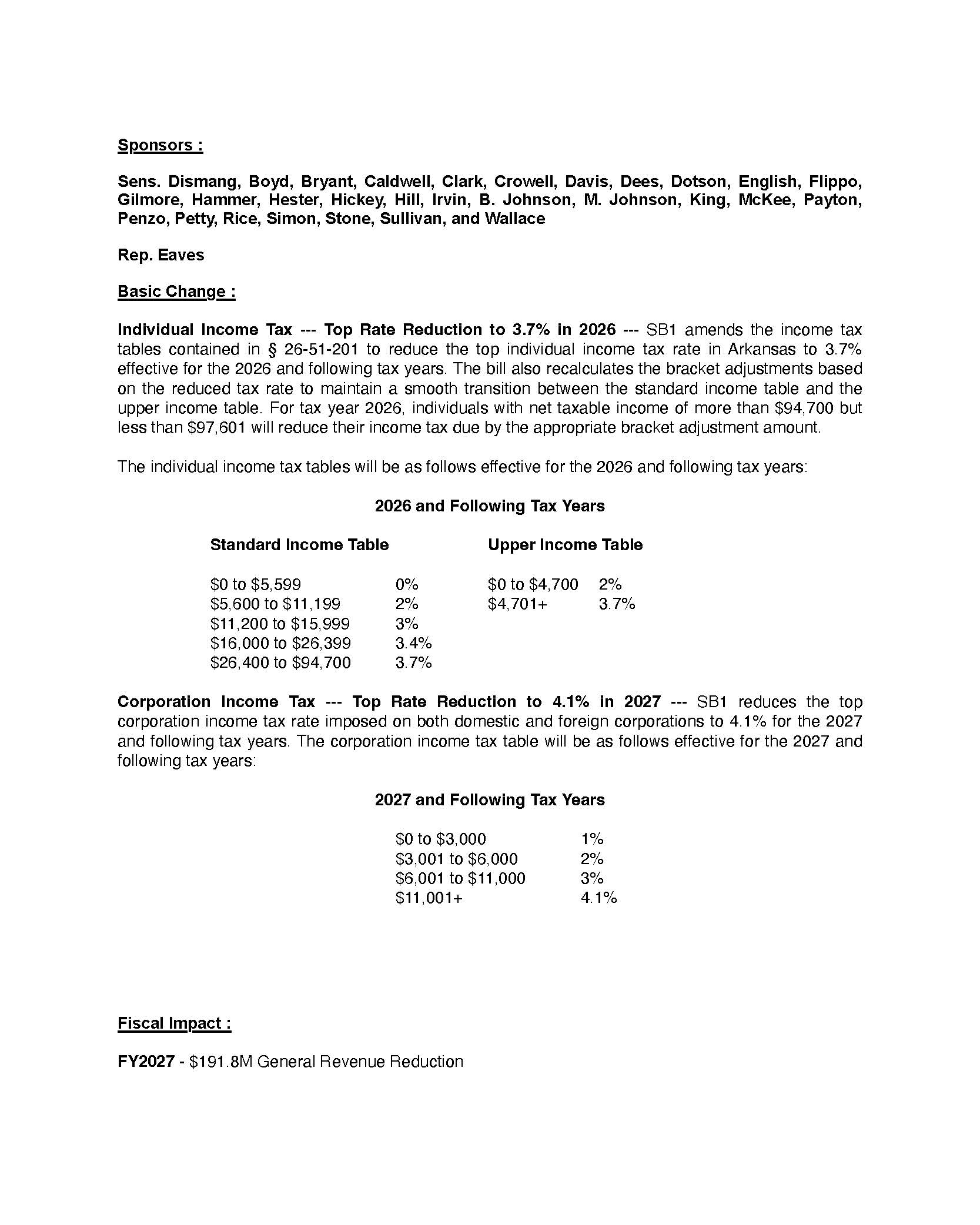
Arkansas legislators convened this week for a special session narrowly focused on cutting the state’s individual and corporate income-tax rates. This is good. Gov. Sarah Huckabee Sanders’ proclamation calls for dropping the top individual income-tax rate from 3.9% to 3.7%, retroactive to Jan. 1, 2026, and lowering the top corporate income-tax rate from 4.3% to 4.1% effective Jan. 1, 2027.

However, the governor is marketing the plan as if taxpayers are about to receive a check. She has framed her tax agenda as “returning” roughly $1.5 billion (and more) to Arkansans. But a tax cut—especially one that applies to future tax years—is not a refund. Conflating the two may be good politics, but it is not honest.
What’s actually on the table
- Individual income tax: Top rate to 3.7% (from 3.9%), retroactive to Jan. 1, 2026—meaning the change applies to income earned this year.
- Corporate income tax: Top rate to 4.1% (from 4.3%), effective Jan. 1, 2027—meaning businesses would see the change next year.
Retroactive rate cuts can reduce what taxpayers owe when they file, and in some cases increase refunds that would have happened anyway under existing withholding rules. But that still isn’t the same as the state “returning” a pile of money it already collected—unless lawmakers also authorize an explicit rebate or one-time refund mechanism.
How Arkansas stacks up in the region
Even after several rounds of cuts, Arkansas still competes in a region where “no income tax” is a real recruiting tool. According to 2026 state income-tax rate tables, Arkansas’ current top individual rate is 3.9%—and the special-session proposal would move it to 3.7%.
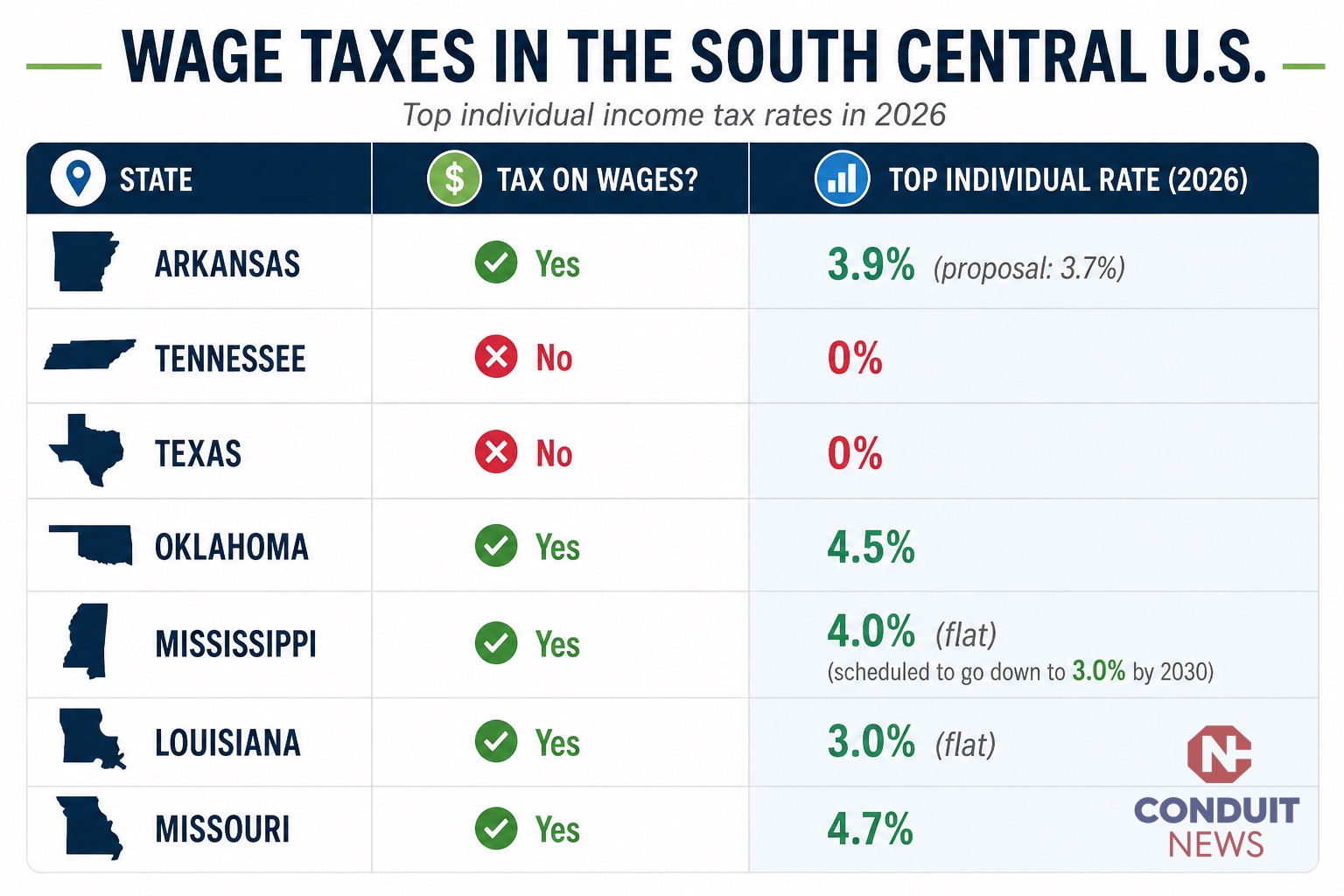
That comparison is not the whole tax picture—sales and property taxes matter too—but it does undercut the talking point that Arkansas is already “leading the region.” With Tennessee and Texas at 0%, Arkansas is still asking workers and small-business owners to pay a state income tax that two major neighbors simply do not levy.
Tax cuts are not refunds—and the “$1.5 billion returned” claim is misleading
When the Governor says she’s “returning $1.5 billion to taxpayers,” she’s using language that implies money is being handed back—like a rebate, a one-time refund, or a direct payment. That isn’t what the Legislature is voting on.
To literally “return” $1.5 billion, the state would have to either (1) cut checks, (2) issue a refundable credit, or (3) otherwise create a mechanism that sends taxpayers money regardless of whether their liability exists in a future year. A rate reduction, by contrast, changes what people owe going forward. It only benefits taxpayers to the extent they have taxable income in the years the lower rates apply.
In plain English: calling future-year tax-rate reductions a “return” of money is false as stated. It’s spin designed to make a marginal rate change sound like a guaranteed payout. Arkansans can support lower taxes and still insist elected officials describe them accurately.
The $300 million question: why prioritize a mystery deal over deeper tax relief?
During the fiscal session that just ended, lawmakers approved setting aside up to $300 million in surplus funds for an economic development “super project” in West Memphis—an advanced manufacturing facility whose corporate beneficiary has not been publicly identified. Even some supporters acknowledged the details were limited because of non-disclosure agreements.
Here’s the uncomfortable reality: if state leaders truly believe taxpayers are overpaying by hundreds of millions of dollars, then sending $300 million to a corporation for a project the public can’t evaluate is the opposite of “returning money.” It is picking a winner—before the public even knows who the winner is.
That $300 million could have been used to deepen the income-tax cut, accelerate future reductions, or—if leaders want to use “return” language—fund an actual one-time rebate. Instead, taxpayers were told to trust that an unnamed company, an undisclosed incentive package, and a not-yet-public cost-benefit analysis will all work out.

What to watch as the special session moves
- Be precise about the numbers: How much relief is delivered in tax year 2026 versus later years? And who actually receives it?
- Stop using “refund” words for rate cuts: If leaders mean “lower future liabilities,” they should say so.
- Demand transparency on corporate giveaways: If $300 million is on the line, taxpayers deserve the company name, job and wage guarantees, independent analysis, and strict claw backs.
- Keep regional competitiveness in view: Arkansas can celebrate progress while acknowledging that Tennessee and Texas still offer a 0% income-tax.
Arkansans don’t need slogans—they need straightforward math and disciplined priorities. If the goal is to let families keep more of what they earn, then lawmakers should cut taxes transparently, measure the results honestly, and stop writing blank checks to unnamed corporations while claiming they’re “returning” money to the people.
Also, with the following statement from the Governor, would it be possible for her to explain how she came up with the return of $1.5 billion to the Arkansas taxpayers when the fiscal impact statement of the tax cuts on the Arkansas budget is as follows: