With the November election getting closer, the campaign for Issue 3 is picking up speed. Op-eds are appearing in the state’s newspapers and business publications, and paid ads are starting to run. Many of them make the same case in almost the same words. They say Issue 3 is a modest tool that Arkansas needs in order to compete, and that turning it down would leave the state behind.
Voters will hear that message a lot between now and November 3. They should also listen to what the “got to keep up with the Joneses” message leaves out.
The latest example of why we should pass Issue 3 is a column by Jim Jackson in Talk Business & Politics titled “Rural Arkansas Shouldn’t Have to Sit on the Sidelines.”
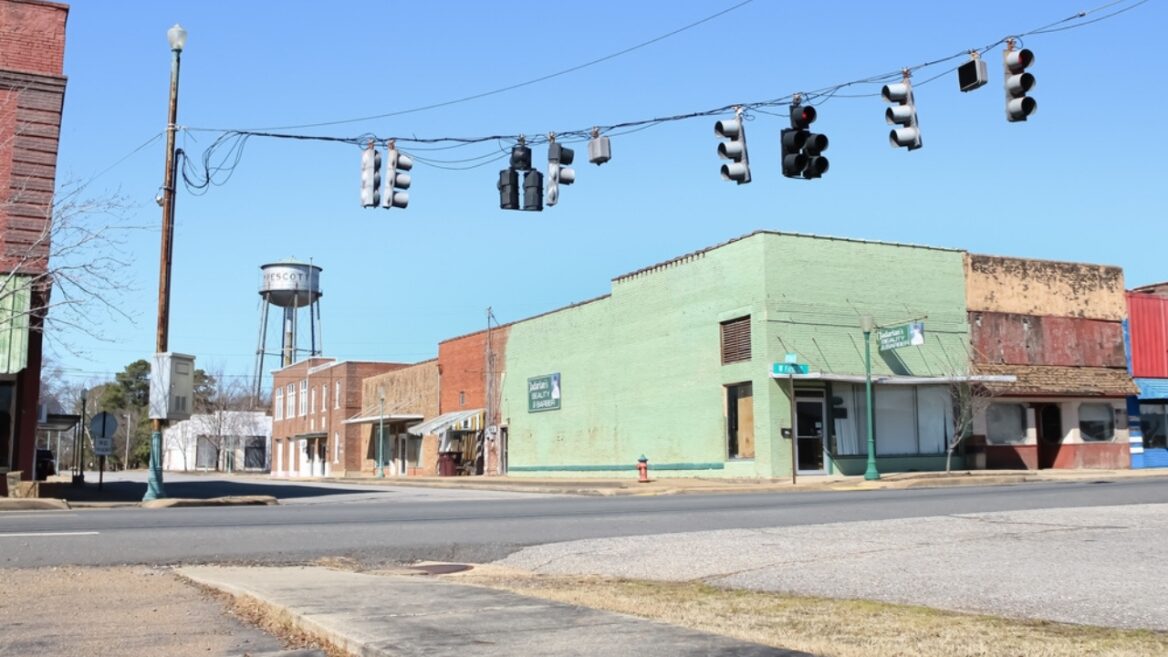
He starts from a fair point. He says a lot of small Arkansas towns have lost jobs and young people over the years while new investment has mostly gone to Little Rock and Northwest Arkansas.
He also wrote that in rural Arkansas, “the margin for error can be smaller.” And with this fact, he is not wrong. However, this statement offers the best argument against Issue 3.
Issue 3 would amend the state Constitution so that the state legislature (or its future designated surrogates) may create economic development districts (designated real estate and other assets) anywhere they desire, where “the project’s” new tax revenue may or may not go toward paying for it while at the same time, exempting the designated property from previously assessed taxes.
Supporters call that a tool. For a small town, it means risking its own future tax dollars on a developer’s plan while at the same time, burdening other taxpayers with the obligation to make up for the lost tax revenues.
At an August 12th state legislative committee hearing in Hot Springs, when discussing Issue 3, Rep. Brit McKenzie, R-Rogers, put it simply: “This isn’t alchemy. We’re not making money up here. We’re extracting the wealth from somewhere.” He is right!
Any money that goes back to a developer is money that doesn’t go to roads, schools, local healthcare, or the sheriff’s office. Small towns have the least of that money to give up….but with Issue 3, they give it up nonetheless…
Arkansas has experience in subsidized development in rural areas. Jefferson County had a special economic development sales tax from 2011 to 2018. It paid for 10 projects, and most of them failed, never started, or delivered less than they promised. Real median income and home values in that county went down during those years. Mississippi County has had two decades of a heavily subsidized steel industry and is still losing people while benefiting those living out of the county and especially out of state.
Mr. Jackson writes that Issue 3 “is not a blank check” because local officials still have to approve each deal. But we know that local officials, under pressure by lobbyist groups like the Arkansas Association of Counties, Municipal League, and Chamber of Commerce, approve bad deals often enough already. When a subsidized project fails in a small county, the developer moves on, and local taxpayers are left to cover what’s left. Elected officials seem to get by with simply saying, “Well, we tried.”
Mr. Jackson also points out that 48 other states use this kind of financing. We admit that this may be true. It shows the idea is popular, but it doesn’t show that it works. Arkansas already has ways to go after big projects, including Amendment 82. So, why do we need Issue 3?
We propose that this is a power grab by the State Legislature (and their lobbyists) to create undefined “economic development” using your tax dollars that they may later excuse as “the people voted for it.”
So, if this is such a modest tool one should ask, “Why is it necessary to put such a modest tool in our state Constitution?”
Giving the legislature unlimited power to give tax dollars to projects designated as “economic development” that are owned by private business, forces Arkansas to take a step too far.
Under our Republican majority, we have already removed the annual bond cap which was 5%. Arkansas does not need to follow other sheep off the cliff—just in order to say—all our friends are doing it. Our state Constitution does not need to be burdened by handing over such power to our state power brokers.
The editor’s note at the bottom of Jackson’s article identifies him as a North Little Rock attorney and developer. That doesn’t make him wrong or bad. But it is relevant to the question every voter should ask about Issue 3: “Who does this Amendment really benefit?”
The people most likely to use these districts are developers who show up with a project, a financing plan, and a request for public money—in an effort to have the taxpayer take on the risk while they walk away with their “percent off the top.” Whether the project is a success is no longer their problem. Others who benefit are those paying high taxes and are looking for a tax break. (Well, we can’t blame them!) But, one must see, in economically struggling communities, struggling small towns are left holding the bills.
Rural Arkansas needs the basics that attract business without putting residents on the hook: lower costs, fewer regulations, good schools and roads that hold up.
Jackson ended his column by saying rural Arkansas has the people, the resources and the grit.
But the reality is-times change. Markets swing high and low. Study the history of our state. Rural areas struggle when it is not their turn to be the ones to prosper. And they certainly should not have to pick up the tab when government comes in to pick a winner.
Capitalism works! We should give it a try and keep government out of our business (and stop this latest deep dive into our pockets).
Voters should reject Issue 3 on November 3.
For more info on all the Ballot Issues this November, see:
https://www.uaex.uada.edu/business-communities/voter-education/issue3.aspx